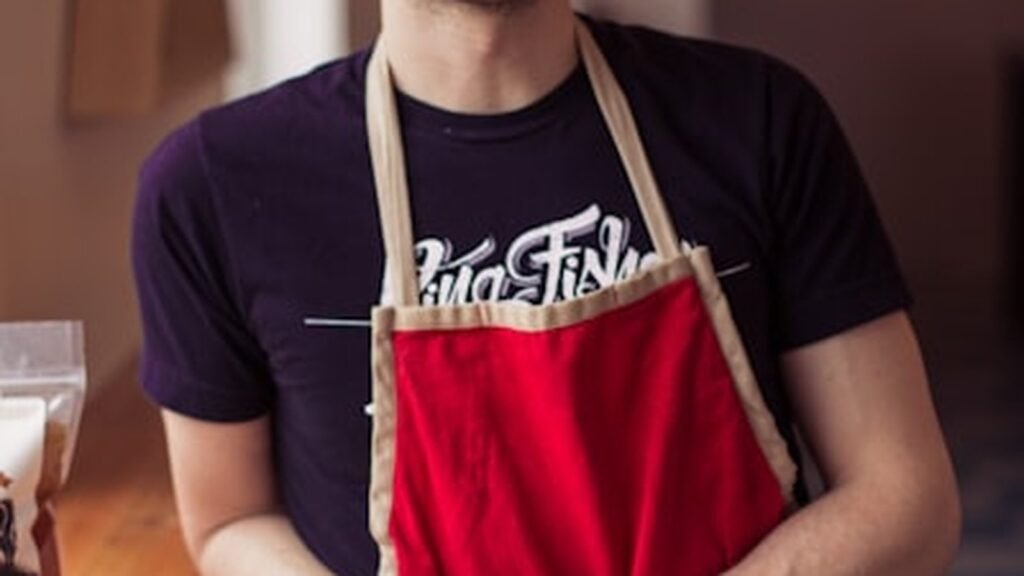
There are two visual worlds inside the Cavanis identity. One is elegant: cream paper, deep green, aged gold, Italian landscapes, olive branches and the romance of a long dinner. The other is darker and louder: black kitchens, red lettering, flying flour, open flame and chefs working with intensity. The restaurant needs both because modern Italian cooking is both hospitality and hard physical craft.
The rebellious edge is not a rejection of tradition. In fact, it only works when the foundations are respected. A chef can play with presentation, combinations and atmosphere after mastering heat, seasoning, dough, pasta and sauce. Without technique, rebellion becomes gimmick. Cavanis wants the attitude to come from confidence rather than noise for its own sake.
That is where the chefs’ experience matters. Training and working in respected Italian kitchens in Italy and London exposes cooks to repetition under pressure. Pasta must be right on a quiet lunch and during a packed Saturday service. Dough does not care that the kitchen is busy. Sauces still need balance. Plates still need to leave the pass hot. Professional standards are built in those unglamorous repetitions.
Italy contributes the cultural foundation. Recipes are connected to places and families, and cooks learn that changing an ingredient can change the identity of a dish. London contributes another kind of discipline: a global dining audience, intense competition and constant exposure to new techniques. Cavanis sits between those influences, using tradition as the grammar and modern restaurant culture as the conversation.
Fresh pasta is one expression of that balance. The process is tactile and old-fashioned in the best sense: mix, knead, rest, roll, cut, fill. Yet the final dish can feel contemporary through proportion, sauce, plating and seasonal ingredients. The goal is not to make pasta look futuristic. It is to make familiar food feel newly alive.
Wood-fired pizza is another. Fire is ancient technology, but controlling a high-temperature oven is a precise skill. The pizza must be prepared so the dough, tomato, cheese and toppings finish together. A few seconds matter. The dramatic flames in the Cavanis imagery reflect the intensity of that moment, but the guest should experience balance rather than chaos.
The kitchen also has to think beyond dine-in. Cavanis serves customers who collect and order delivery, which means quality has to survive a journey. That requires operational discipline: timing orders, choosing packaging, managing the pass and making sure food does not wait unnecessarily. A creative restaurant still needs systems. The most memorable hospitality often depends on processes the guest never sees.
Ingredients provide another boundary for creativity. When tomatoes are sweet, herbs are fresh, cheese has character and olive oil is aromatic, a chef can do less and achieve more. Cavanis is building its food around that principle. The final menu is still being refined, so the Journal will not pretend every future dish has already been decided. What is decided is the standard: ingredients should justify their place.
The same applies to wine and beer. A Modern Italian Kitchen should not treat drinks as an appendix. They are part of the atmosphere and part of the flavour experience. The final list will be chosen to sit naturally beside pizza, pasta and the wider menu, giving guests straightforward choices as well as room to explore.
Cavanis also wants personality. Restaurants become memorable when they have a point of view that reaches beyond a logo. Music, photography, typography, service language, plating and even the way stories are told online can reinforce the same identity. The Cavanis Journal is deliberately more editorial than a standard restaurant blog because it should feel like an extension of the restaurant rather than a noticeboard.
Tradition with a rebellious edge therefore means knowing what should not change and being brave about what can. Respect the dough. Respect the pasta. Respect the ingredient. Respect the guest. Around those non-negotiables, there is room for energy, creativity and a little provocation. That is the kitchen Cavanis is setting out to build in Farnham Common.
That personality should never become an excuse for inconsistency. The rebellious kitchen posters are a visual device; the real kitchen must be organised, clean, calm under pressure and rigorous about food safety. Creativity works because the fundamentals are controlled. Guests may see flames and attitude in the campaign imagery, but behind the scenes the standard has to be professional every service.
Over time, the Journal will document that evolution rather than freeze Cavanis into a launch concept. New dishes can be tested, seasonal ideas can appear, chefs can explain techniques and suppliers can be introduced. A living restaurant changes. The challenge is to change in ways that strengthen its identity instead of chasing every trend. That long-term discipline is what can turn a striking launch identity into a restaurant people recognise, trust and return to — a modern Italian kitchen with enough confidence to evolve without forgetting what it stands for.
Continue the Cavanis experience
Visit the restaurant website for Cavanis in Farnham Common, or order directly for delivery and collection.